
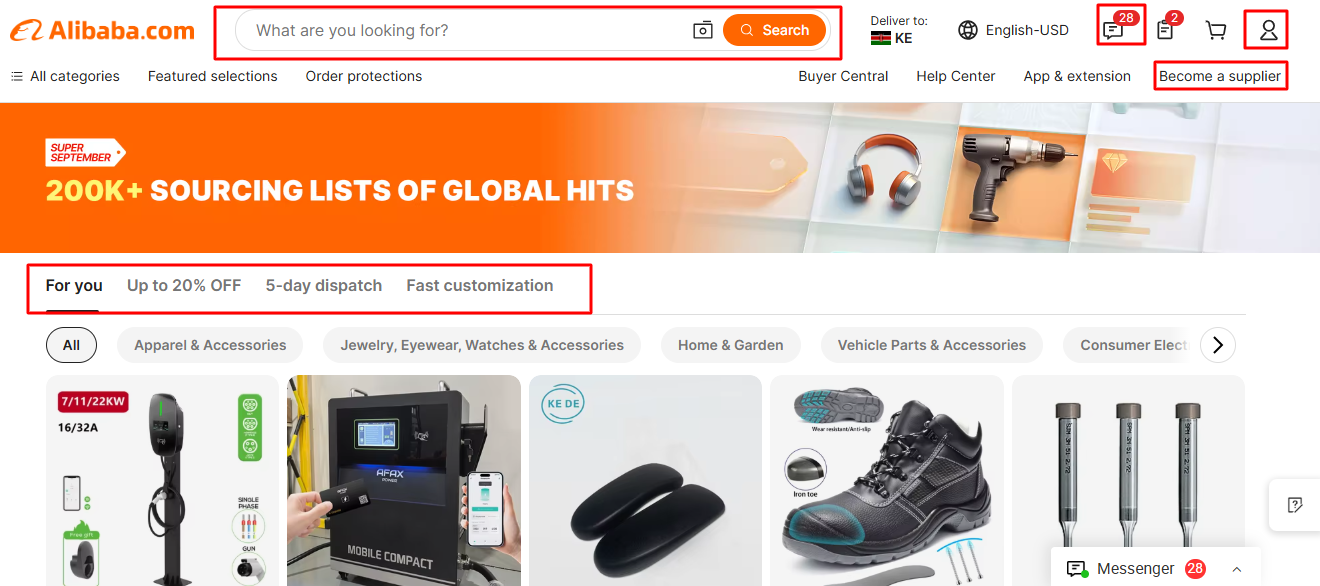
The Ultimate Guide: How to Securely Import to Kenya from Alibaba -A Step-by-Step Blueprint
Import to Kenya from Alibaba made easy.
Do you want to Import to Kenya from Alibaba? Are you an entrepreneur in Kenya looking to source high-quality, competitively priced goods directly from Chinese manufacturers? Importing to Kenya from Alibaba has become a game-changer for businesses both big and small, offering access to millions of products. In this
However, the journey from finding a supplier in Guangzhou to receiving your shipment in Nairobi or Mombasa is paved with crucial steps. This guide provides a complete, easy-to-follow blueprint to ensure your first (or next) import is a resounding success.
Phase 1: Setting Up and Sourcing on Alibaba
The initial steps are all about laying a strong, secure foundation on the platform itself.
1. Creating Your Alibaba Account, Sign Up Here.
Before anything else, a professional account must be established.
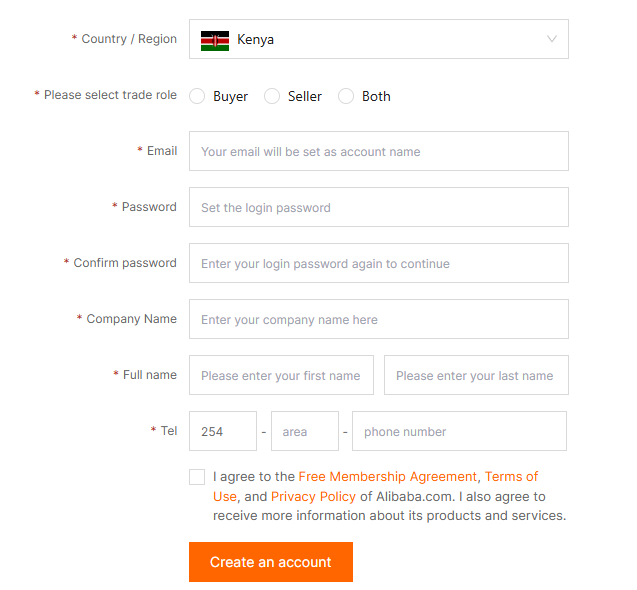
- Registration: Navigate to Alibaba.com and click ‘Join Free‘ or ‘Sign In‘. You will be asked for basic information, including your name, company name (if applicable), and contact details consequently proceed to the verification stage.
- Verification: An email verification link will be sent to your inbox. Once clicked, your account is officially registered. It is highly recommended to fill out your profile completely; this builds credibility when communicating with potential suppliers, as your intent as a serious buyer is immediately established.
2. Searching and Comparing Products
With your account active, you can begin the exciting process of product discovery.
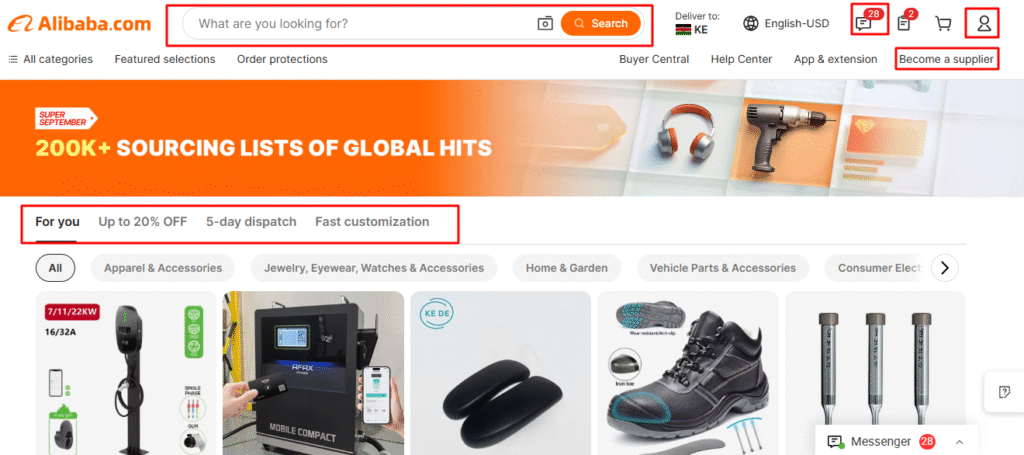
- Smart Search: Use precise keywords. Instead of just “shoes,” try “women’s running shoes manufacturer.” The more specific your search, the more relevant the results will be.
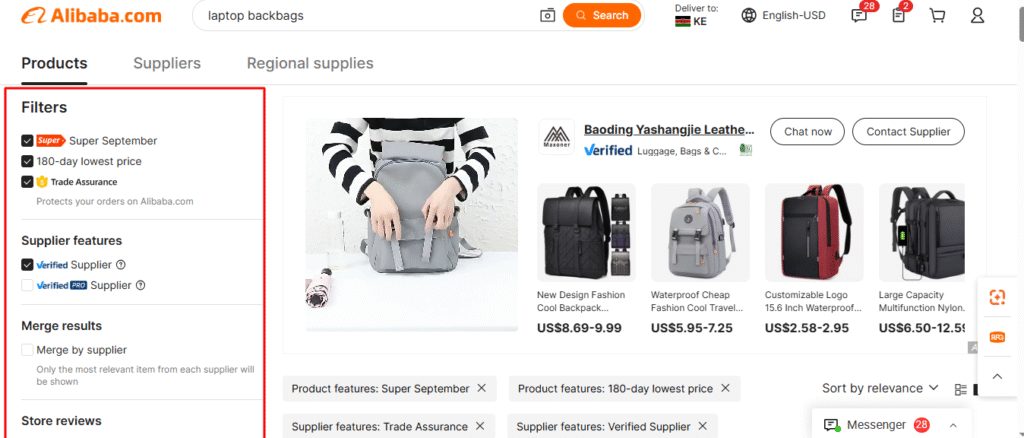
- Utilize Filters: Filters are your best friend. Use them to narrow the search by:
- Trade Assurance: Always check this box for maximum security (more on this later).
- Verified Supplier: This confirms the supplier’s operations have been inspected by third parties.
- Price Range and MOQ: Set a realistic price range and filter by the Minimum Order Quantity (MOQ) that aligns with your business’s needs.
3. Vetting Your Potential Suppliers: Due Diligence is Key
This is arguably the most critical step. Suppliers must be carefully vetted to protect your investment. A few key indicators must be checked:
| Indicator | Why It Matters | Actionable Tip |
| Verification Status | Confirms the supplier is a legitimate, audited business. | Look for “Verified Supplier” badge and check the “Supplier Capabilities Assessment” report. |
| Trade Assurance | Alibaba’s free escrow-like service that protects your payment if product quality or shipping schedule is violated. | Insist on making payment through Trade Assurance for every order. |
| Customer Reviews | Provides real-world feedback on product quality, communication, and reliability. | Focus on the overall rating (4.5+ is great) and read recent 1- and 2-star reviews to understand potential flaws. |
| Price & MOQ | Determines your overall landed cost and inventory risk. | Compare the quoted price with 3-5 other suppliers for the same product. Be ready to negotiate a slightly lower MOQ if needed. |
| Response Time | Indicates professionalism and the ease of future communication. | Check the response rate displayed on their page. Aim for suppliers with a high response rate (90%+) and a quick response time. |
Phase 2: Negotiation and Secure Payment
Once a reliable supplier is identified, the conversation moves to commercial terms.
4. Negotiating for the Best Deal while you Import to Kenya from Alibaba
The initial price is rarely the final price. Negotiation is expected and should be approached professionally.
- Communicate Your Intent: Start by stating your full intent—you are an importer in Kenya, you are looking for a long-term supplier, and your initial order is a test of the relationship. This frame often leads to better pricing.
- Focus on Volume: While you may be testing with a low MOQ, subtly indicate future, larger orders. A potential large order down the line can result in a better initial per-unit price.
- The Payment Term Negotiation: Suppliers prefer T/T (Telegraphic Transfer), but for your security, insist on using Alibaba Trade Assurance. A common arrangement is a 30% down payment to start production and the remaining 70% paid after a quality inspection and before the final shipment is released.
5. Making Secure Payment and Ordering Samples
Payment security is paramount when you import to Kenya from Alibaba.
- Secure Payment: As previously stressed, always use Alibaba Trade Assurance. Your funds are held by Alibaba and only released to the supplier after you confirm receipt of the goods in a satisfactory condition, providing a strong layer of buyer protection.
- Sample Order: Before committing to a bulk order, a sample must be requested. This allows for a thorough quality check and ensures the product matches the online description. Though samples incur a cost, they save you from the disaster of a faulty bulk shipment.
Phase 3: Logistics and Shipping to Kenya
This is where the goods physically leave China and make their way to your location in Kenya.
6. Connecting the Supplier with Your Shipping Agent as you Import to Kenya from Alibaba
For Kenyan importers, the most cost-effective and headache-free method is often using a dedicated China-Kenya Freight Forwarder.
- FOB vs. EXW: The supplier will quote a shipping term.
- EXW (Ex Works): You arrange and pay for the goods to be picked up directly from the factory gate.
- FOB (Free On Board): The supplier handles the transport and costs to get the goods to a designated port in China (e.g., Shanghai or Shenzhen), where your shipping agent takes over. FOB is generally preferred as it simplifies the supplier’s role.
- The Handover: Once the goods are ready, you will provide your supplier with your Kenyan shipping agent’s Chinese warehouse address and contact details. The supplier then ships the goods to that location.
7. Documentation and Customs Clearance in Kenya
Getting your paperwork right is essential to avoiding delays at the Port of Mombasa or Jomo Kenyatta International Airport (JKIA).
- Required Documents: Your supplier will generate the essential commercial documents, which must be shared with your shipping agent immediately. These typically include:
- Commercial Invoice: Details the goods and their value.
- Packing List: Provides weights, dimensions, and contents of each carton.
- Bill of Lading (B/L) or Air Waybill (AWB): The contract between you and the shipping company.
- KEBS Compliance (PVoC/CoC): For many regulated products imported into Kenya, a Pre-Export Verification of Conformity (PVoC) is required. Your Kenyan Bureau of Standards (KEBS)-approved shipping agent or a third-party inspection company (like SGS or Bureau Veritas) can help ensure your supplier provides the mandatory Certificate of Conformity (CoC). This is necessary for customs clearance.
- The Agent’s Role: A reliable agent will handle the Import Declaration Form (IDF) application, customs entry, duty, and tax calculations based on the Harmonized System (HS) Code of your product.
8. Follow-Up and Goods Receipt when you Import to Kenya from Alibaba
The final stretch requires close coordination.
- Tracking: Your shipping agent will provide you with tracking updates for the vessel (sea freight) or flight (air freight). You must be responsive to any requests for further documentation or payments for customs duties and taxes.
- Final Payment & Delivery: Once the goods clear customs in Kenya and all local duties and port charges have been settled (often paid to the agent), the final leg of transportation—from the port/airport to your warehouse or specified address—is arranged.
Conclusion: Your Import Journey Simplified
Importing to Kenya from Alibaba is a business strategy built on trust, due diligence, and organized logistics. By registering smartly, vetting your suppliers through Trade Assurance, negotiating confidently, and partnering with a capable Kenyan shipping agent, the process can be demystified.
Successfully navigating these steps will turn the daunting task of international sourcing into a predictable and profitable component of your Kenyan enterprise.
Ready to start sourcing your products? Would you like a list of highly-rated freight forwarders that specialize in the China-to-Kenya route?
Contact Paul on WhatsApp or Follow our Facebook Page for more business news. Return to PSP Home page for more news and information.